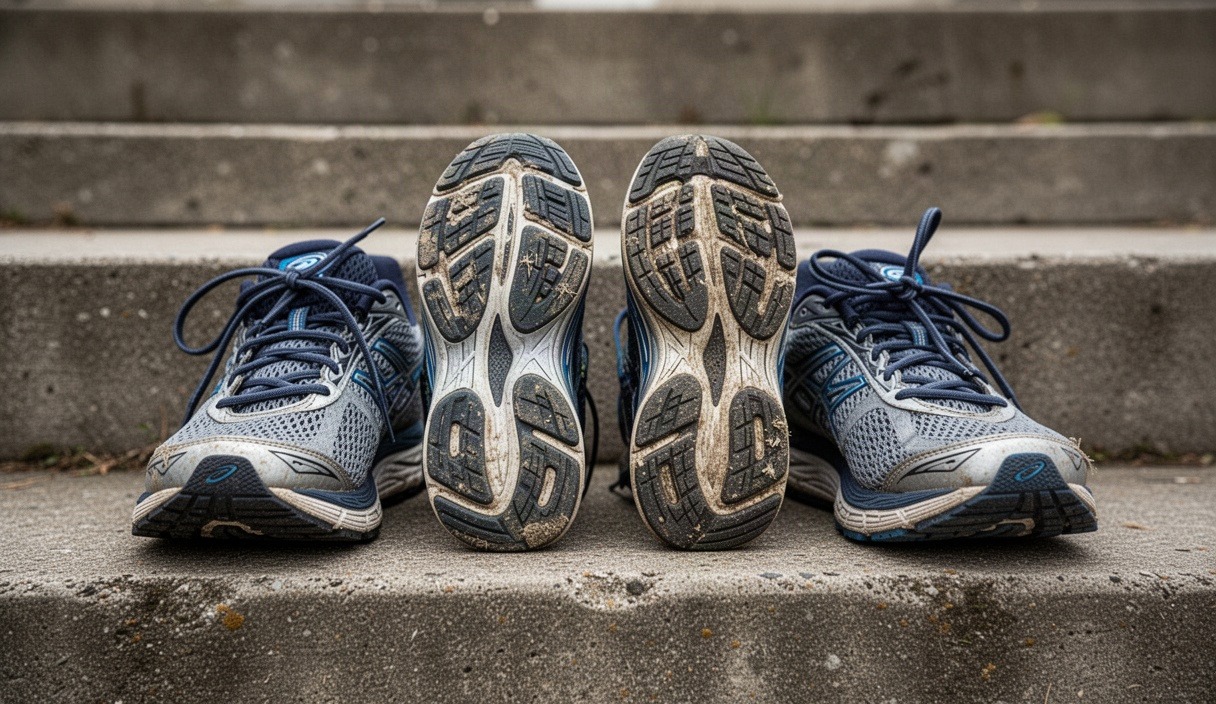

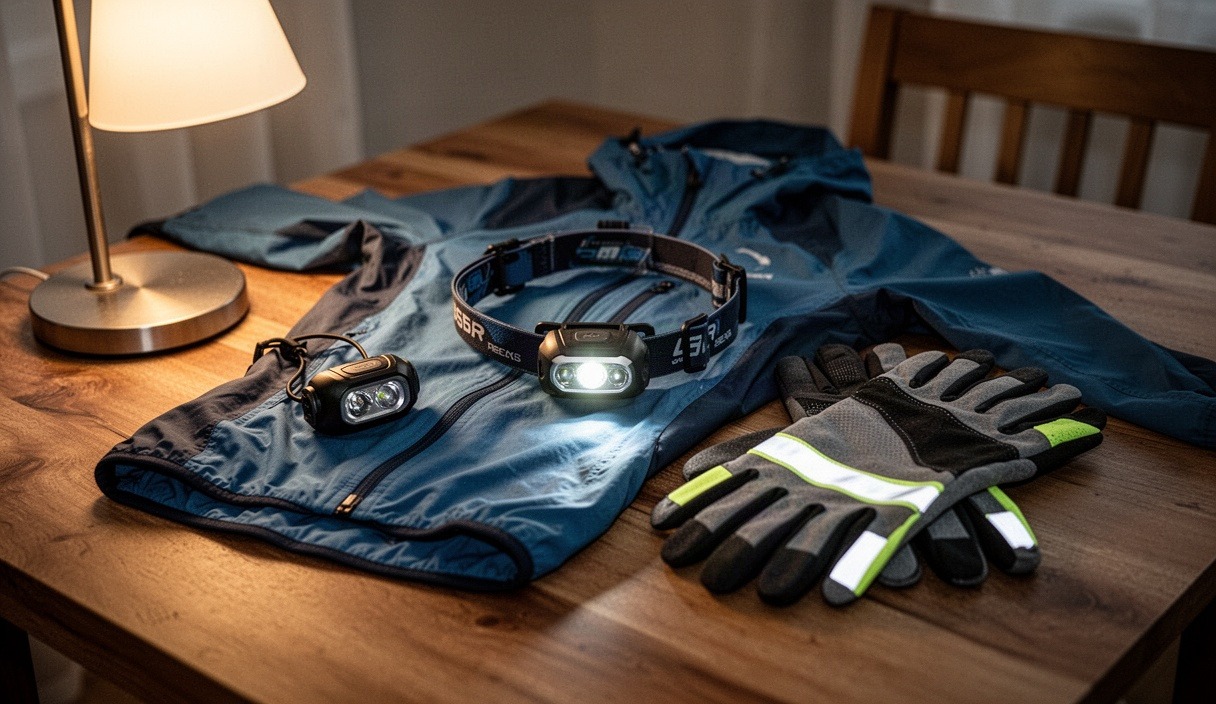
Consistency often depends on practical preparation rather than raw motivation. Luna explains the night-before setup and layering strategies that made early runs possible in winter.
Waking up at 5:15 a.m. when rain hits the windowpane and the thermometer reads 33 degrees Fahrenheit exposes every flaw in a runner's morning routine. The bed is warm, the streetlights outside illuminate driving sleet, and the friction of searching for matching gloves or a charged headlamp is usually enough to kill the workout. Relying on raw willpower under these conditions rarely works over a full training cycle. Motivation tends to evaporate when body temperature drops before you even tie your shoes.
Consistency through late autumn and winter requires viewing bad-weather runs as logistical puzzles rather than tests of character. Cold rain, slush, and dark mornings introduce real risks, including hypothermia, slips on slick utility covers, and reduced visibility to morning commuters. Navigating these obstacles successfully demands an organized protocol for gear management, thermal balance, and neuromuscular preparation. When your habits are structured correctly, stepping out the front door into freezing drizzle takes less than fifteen minutes from the moment the alarm sounds.
The Evening Prep Routine That Eliminates Morning Delays
The success of a cold, wet morning run is decided twelve hours earlier. Executive function is notoriously weak within the first ten minutes of waking. If you have to make decisions about which jacket thickness matches the dew point, or if you must search through laundry piles for wool socks, your odds of staying in bed increase significantly. A rigid evening staging process removes friction by treating morning preparation as a simple sequence of mechanical movements.
Start by checking a reliable weather radar app that provides hourly temperature, wind speed, and precipitation forecasts. A temperature of 36 degrees with an eight-mile-per-hour wind creates an effective chill factor that demands wind-blocking gear, whereas 36 degrees with zero wind allows for a lighter shell. Once you verify the conditions, lay out every piece of clothing in order of wear on a table or chair. Place socks on top of tights, base layer over socks, and outer shell on the back of the chair. Pin your safety lights or bibs in place the night before so you are not handling tiny clasps with cold fingers in the morning.
Electronics require specific attention because sub-freezing temperatures degrade lithium-ion battery performance quickly. A headlamp that shows two out of three battery bars at room temperature may shut off after twenty minutes in 28-degree air. Complete this staging checklist before going to bed:
- Connect your headlamp, rear flashing beacon, and GPS watch to chargers by 8:00 p.m.
- Place your running shoes near a heating vent or dry area, ensuring insoles are flat and laces are untangled.
- Fill an insulated handheld bottle with room-temperature water, which resists freezing longer than chilled water.
- Set out anti-chafe balm directly next to your clothing stack, because wet fabric against cold skin increases shear friction on inner thighs and underarms.
- Program your coffee machine or place a thermos of tea on the counter to provide immediate internal warmth upon waking.
Layering for Freezing Temperatures Without Overheating
The most common error in cold-weather running is dressing for the first three minutes of the workout. When you walk onto the porch, your body is producing minimal heat, making you feel chilled instantly. However, active running multiplies metabolic heat production by roughly eight times compared to resting levels. If you dress to feel cozy while standing on the sidewalk, you will be drenched in sweat by mile two. Trapped sweat saturates fabric, collapses air pockets that provide insulation, and leads to rapid hypothermia if wind cuts through your layers or if you slow down to walk.
The goal of cold-weather layering is moisture transfer combined with wind deflection. Your base layer should consist of synthetic fibers such as polyester or polypropylene, or a lightweight merino wool blend ranging from 150 to 200 grams per square meter. Merino wool retains its insulating properties even when wet, making it practical for steady runs in freezing rain. Avoid cotton entirely, as its cellulose fibers absorb up to twenty-seven times their weight in water and hold it against the skin. For the mid-layer, choose a waffle-knit or grid fleece that traps warm air in pockets while venting moisture during hard efforts.
The outer layer serves as a barrier against precipitation and ambient airflow. A fully waterproof, non-breathable plastic jacket creates a portable sauna, trapping your perspiration inside. Instead, select a water-resistant shell coated with durable water repellent (DWR) that features mechanical venting, such as underarm zippers or back capes. For your hands and head, where a significant amount of heat loss occurs due to surface capillary dilation, modular gear works best. Thin liner gloves paired with water-resistant wind mittens allow you to adjust warmth without exposing bare skin to freezing wind.
| Temperature Range | Base Layer | Mid-Layer | Outer Shell | Extremities |
|---|---|---|---|---|
| 38°F to 45°F with light rain | Short-sleeve synthetic technical shirt | None required for moderate efforts | Ultralight DWR wind jacket | Lightweight brimmed cap, bare hands or thin liners |
| 28°F to 37°F with freezing rain or sleet | Long-sleeve merino wool (150-180 gsm) | Lightweight grid fleece vest | Seam-taped waterproof-breathable jacket with venting | Thermal headband, water-resistant wind mittens, wool socks |
| Below 28°F with dry snow or high wind | Midweight synthetic thermal top (200+ gsm) | Full-sleeve breathable insulation layer | Windproof technical shell with adjustable hood | Fleece beanie, insulated mittens, windproof running briefs |
Safety Essentials: Headlamps and High-Contrast Gear
Dark mornings combined with rain reduce vehicle driver visibility drastically. Wet asphalt absorbs headlight beams rather than reflecting them, and rain-streaked side windows obscure motorists' peripheral vision. Relying simply on daylight-fluorescent colors like neon yellow or bright orange is insufficient in the dark. Fluorescent dyes require ultraviolet light to produce their glowing effect; under streetlamps or incandescent car headlights, neon clothing appears as dull gray or muddy brown.
True visibility in darkness depends on retroreflective materials placed at points of motion. Retroreflective tapes use microscopic glass beads or micro-prisms that bounce incoming light directly back to the driver's eye level. Placing reflective accents on your ankles, wrists, and knees utilizes the biological motion phenomenon. Drivers identify the rhythmic movement of human limbs much faster than they process a stationary reflective vest. Look for tights with reflective cuffs, or add commercial reflective bands around your ankles just above the shoe collar.
Your headlamp serves two distinct purposes: illuminating your landing surface to avoid hidden black ice or deep puddles, and signaling your position to traffic. For street and suburban running, an output between 200 and 350 lumens is ideal. A light that is too weak leaves pavement hazards hidden until it is too late to alter your stride, while an excessively bright light creates blinding backsplash off falling rain or snow. Choose a lamp that balances a broad flood beam with a focused spot beam, and tilt the light downward roughly ten to fifteen feet ahead of your feet to create contrast on ground textures.
- Wear a rear-facing red light set to a slow flashing pattern to avoid disorienting drivers while remaining noticeable from behind.
- Avoid running with headphones that seal the ear canal; situational awareness of approaching vehicles or falling tree limbs is critical on dark, stormy mornings.
- Choose a brimmed running hat worn under your hood or headlamp strap to keep freezing rain off your face and prevent droplets from obscuring your vision.
Warming Up Indoors Before Stepping into Cold Air
Walking directly from a warm hallway into 30-degree air for an immediate sprint causes peripheral blood vessels to constrict rapidly, elevating blood pressure and stiffening connective tissues. Tendons and ligaments have limited vascular supply and are naturally less compliant at lower temperatures. A cold achilles tendon or plantar fascia subjected to sudden loading on slick pavement faces an increased risk of micro-tears. An indoor warm-up raises core body temperature, circulates synovial fluid within the joint capsules, and activates the nervous system before your foot touches cold asphalt.
Dedicate eight to twelve minutes to dynamic movement inside your living room. The objective is to break a very light sheen of sweat without fatiguing your muscles or soaking your base layer before heading outside. Avoid static stretching, which cools muscles down and temporarily reduces force output. Instead, use multi-plane mobility exercises that mimic the running gait and wake up stabilizing muscles around the hips, knees, and ankles.
If you have pre-existing cardiovascular conditions or exercise-induced asthma, sudden inhalation of cold, dry air can trigger bronchospasms or place abrupt strain on the heart. In these situations, consult a physician or physical therapist for tailored warm-up protocols. For general runners, completing the following sequence indoors prepares the body for cold exposure:
- Ankle mobility drills: Write the alphabet in the air with each foot, ten letters per side, to lubricate the talocrural joint.
- Glute bridges: Perform twelve repetitions with a two-second pause at full hip extension to wake up the posterior chain.
- Forward-to-reverse lunges: Complete eight continuous reps per leg to take the hips through a full active range of motion.
- Leg swings: Perform ten front-to-back swings and ten lateral swings per leg while holding a doorway for stability.
- Pogo hops: Finish with thirty seconds of light, rhythmic hopping on the balls of your feet to warm the calves and achilles tendons.
Mental Reframing for Dreary Weather Runs
The psychological friction of winter training stems largely from anticipatory dread. The human mind tends to magnify discomfort when imagining a run while sitting in a dry room. Once you are three-quarters of a mile into the workout, internal heat builds, the rhythm of your breathing takes over, and the environment becomes manageable. Overcoming the initial barrier requires mental frameworks that shorten your decision-making horizon.
Implement the ten-minute commitment rule on difficult mornings. Give yourself permission to turn around and come home if you are genuinely miserable after running for ten continuous minutes outside. Nine times out of ten, by the time the ten-minute timer chimes, your core temperature has risen, endorphins are circulating, and the desire to quit has passed. On the rare day that conditions are truly miserable or unsafe, turning back is a sensible choice, not a failure of will.
Break dreary routes into small, tangible milestones rather than focusing on the total mileage. Instead of dreading an eight-mile loop in driving rain, focus your attention strictly on reaching the three-mile bridge, then the five-mile intersection. Focusing on immediate physical markers prevents mental overwhelm. Additionally, recognize that completing training sessions in tough conditions builds deep psychological resilience that transfers directly to race day, where ideal weather is never guaranteed.
Common Mistakes in Wet and Cold Weather Running
Even experienced runners make systematic errors during winter transitions that lead to missed workouts or ruined gear. One widespread mistake is failing to maintain hydration. Because cold air reduces the thirst mechanism and sweat evaporates rapidly in crisp air, runners often conclude they do not need fluids. However, you lose significant amounts of water vapor simply by humidifying dry, freezing air in your lungs with every breath. Drink water before you leave and hydrate immediately upon your return.
Another error is improper post-run shoe maintenance. Placing soaked running shoes directly on a radiator or in front of an open fireplace damages the midsole foam and shrinks technical upper meshes. Instead, remove the insoles, loosen the laces completely, and stuff the shoes tightly with dry newsprint or unprinted packing paper. The paper draws out interior moisture within six to eight hours without degrading the EVA or polyether block amide compounds in the cushioning.
Lastly, runners frequently neglect traction hazards on wet roads. Wet leaves, painted crosswalk markings, and metal utility covers become exceptionally slick when wet or coated in thin frost. Shorten your stride length by roughly five to ten percent and increase your cadence slightly when traversing slippery surfaces. Keeping your center of mass directly over your footstrike reduces the lateral shear forces that cause sudden, painful slips.
Practical Next Steps for Your Next Morning Run
Building a seamless winter routine takes practice, but you can implement the foundation tonight. Begin with small adjustments that eliminate early-morning resistance and build confidence in your gear systems.
- Review tomorrow morning's local wind and precipitation forecast right now, noting the exact temperature at the hour you plan to run.
- Set out your base layer, wind shell, wool socks, and safety gear in a dedicated pile away from your dark closet.
- Plug in your headlamp and flashing lights, ensuring their batteries reach full capacity before you sleep.
- Review your planned route and select well-lit streets with clear sidewalks or broad shoulders rather than unlit, uneven dirt trails.
- Commit to performing eight minutes of dynamic indoor movements tomorrow morning before opening your front door.
If you struggle with chronic cold extremities, persistent joint pain during cold runs, or respiratory difficulties in freezing weather, schedule a consultation with a sports medicine physician or physical therapist to ensure your winter training program is safe for your body.
This journal provides training notes for educational purposes: consult a sports doctor or physical therapist before starting an intense daily running regimen. Disclaimer