
Daily miles demand reliable footwear that does not collapse prematurely. This breakdown explains how alternating two daily trainers prevented overuse injuries across five years.
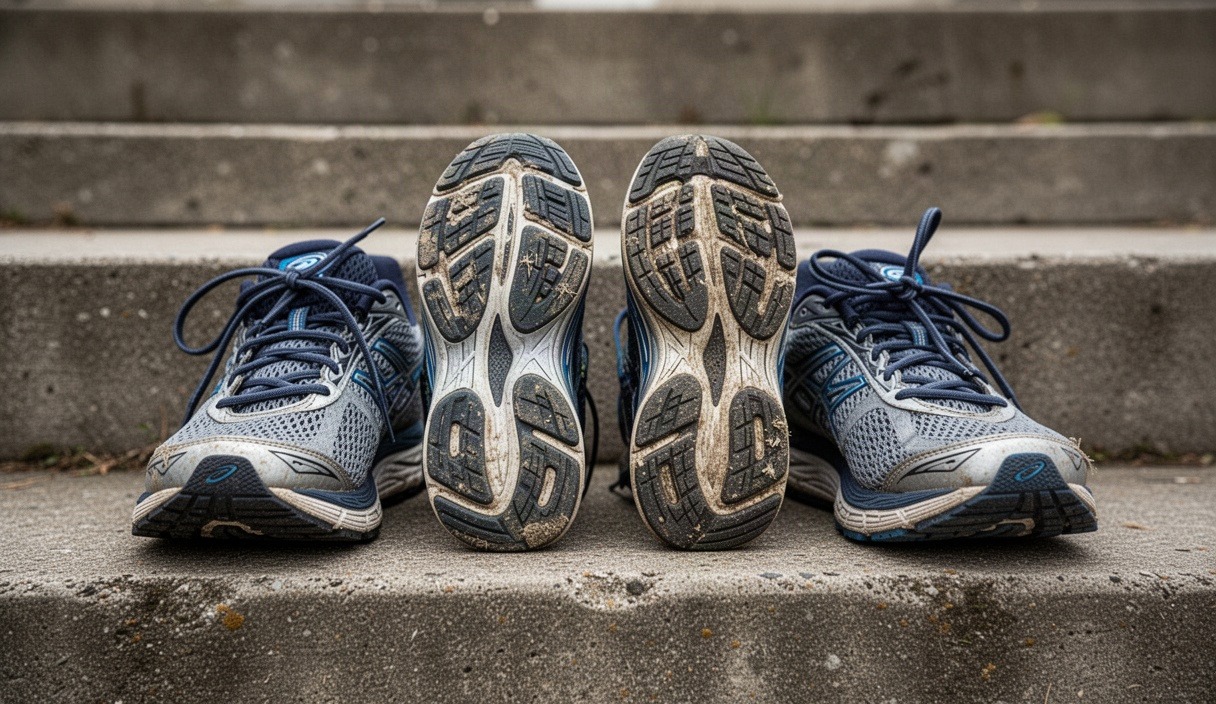
Every runner encounters the standard shoe replacement guideline: discard your footwear between 300 and 500 miles. Retailers and manufacturers often repeat this recommendation, but modern midsole foams differ significantly in their chemical degradation rates. Traditional ethylene-vinyl acetate (EVA) foams break down much faster than expanded thermoplastic polyurethane (eTPU) or polyether block amide (PEBA). Throwing away a shoe at 300 miles simply because an odometer hit an arbitrary number wastes money and fills landfills prematurely.
Getting a pair of running shoes past the 500-mile mark without risking lower leg strain requires an understanding of foam rebound, mechanical recovery intervals, and outsoles. A runner logging 35 miles per week burns through roughly four pairs of shoes each year if they retire shoes at 350 miles, spending upwards of $600 annually. By establishing an alternating system based on structural properties rather than marketing cycles, runners can safely extract 500 to 600 miles from durable trainers while protecting their soft tissue.
Why Alternating Pairs Extends Midsole Lifespan
Running midsoles do not simply absorb impact; they compress under dynamic loads equivalent to two to three times a runner's body weight. When an EVA-based or supercritical foam cell structure is crushed repeatedly during a 6-mile workout, the micro-cellular air pockets lose their structural rebound capacity. Research in mechanical testing shows that common midsole foams require 24 to 48 hours to fully decompress back to their original resting thickness. If you run in the same shoe the following morning, you apply repetitive stress to a foam that remains 8% to 15% flatter than its baseline, accelerating permanent cellular packing.
Sweat and atmospheric humidity also degrade the internal geometry of running shoes. An average foot produces roughly 100 to 150 milliliters of perspiration during an hour of hard running. This moisture soaks through the strobel board and settles directly into the open-cell structure of the topsole and upper foam layers. When wet, synthetic polymers become more vulnerable to mechanical shear. Alternating between two pairs gives the shoe sufficient time to dry thoroughly at ambient room temperature, preserving the chemical bonds of the midsole and eliminating premature foam hardening.
Rotating shoes also varies the repetitive mechanical load applied to your feet and lower legs. Every shoe possesses a unique combination of heel-to-toe drop, rocker geometry, and base width. Running in a single shoe daily forces identical angles of impact across the metatarsal heads, Achilles tendon, and plantar fascia. Introducing a second shoe with a different heel drop, such as shifting between an 8-millimeter drop and a 4-millimeter drop, distributes stress across varied soft tissues, lowering the rate of localized fatigue for both the shoe and the runner.
Daily Trainers Versus Plated Shoes for Base Runs
The popularity of carbon-plated and nylon-plated racing shoes has led many runners to use them for routine recovery and aerobic base miles. Plated shoes depend on soft, low-density foams such as PEBA to maximize energy return. These high-performance foams compress easily to allow the rigid plate to lever forward. However, this compliance comes at the direct expense of durability. In pure PEBA racing shoes, the foam begins to lose structural resilience between 150 and 220 miles, with the plate transferring increased shear force into localized sections of the midsole.
Traditional daily trainers rely on denser chemical compositions, such as aliphatic TPU or compression-molded EVA blends, often combined with full-contact rubber outsoles. These platforms resist the abrasive shearing forces generated during routine cornering, uneven pavement strikes, and slow-cadence foot strikes where ground contact time is longer. A typical base run of 8 to 10 minutes per mile involves ground contact times above 230 milliseconds, which crushes delicate PEBA foams much faster than short, quick 180-millisecond strides typical of race pace.
| Parameter | Non-Plated Daily Trainer | Plated Super Shoe |
|---|---|---|
| Core Midsole Chemistry | eTPU or Supercritical EVA | Autoclaved PEBA |
| Outsole Thickness | 3.0 to 4.5 millimeters | 1.0 to 1.8 millimeters |
| Average Ground Contact Target | 210 to 260 milliseconds | 160 to 200 milliseconds |
| Estimated Functional Lifespan | 450 to 600 miles | 180 to 250 miles |
| Cost per Mile (Average) | $0.23 to $0.31 | $1.10 to $1.55 |
Reserving plated footwear for specific speed intervals and key tune-up workouts protects both your budget and your gait mechanics. Plated shoes alter foot kinematics by stiffening the metatarsophalangeal joint, which can reduce the natural eccentric loading of the calf complex. Over-reliance on rigid plates for base running dulls intrinsic foot strength over time, which can compromise the biomechanical stability required to push high-mileage daily trainers safely to 500 miles.
Signs the Midsole Has Failed Before the Outsole Wears Out
Visual inspection of the rubber outsole is the least reliable method for evaluating a running shoe's health. Modern high-abrasion carbon rubber outsoles often look intact at 450 miles, showing only slight scuffing at the lateral heel and under the first metatarsal head. Meanwhile, the midsole sitting directly above that pristine rubber may be completely deadened, having lost its ability to dampen transient shock waves.
To determine if a midsole has structurally failed, check for the following objective physical indicators:
- Horizontal Creasing Density: Light vertical creases are cosmetic, but deep horizontal wrinkles that remain embedded in the foam sidewalls when no body weight is applied indicate mechanical collapse of the foam cell walls.
- The Medial Tilt Test: Place the shoes on a flat, level table and view them from eye level directly behind the heels. If either shoe leans noticeably inward or outward, the midsole foam has compressed asymmetrically under your footstrike pattern and will force abnormal foot motion during subsequent runs.
- Torsional Collapse: Grasp the heel with one hand and the midfoot with the other, then twist the shoe. A fresh shoe provides resistance. If the midfoot twists like a wet dishcloth with minimal resistance, the structural support across the longitudinal arch has failed.
- The Thumb Depression Rebound: Press your thumb firmly into the center of the heel foam on the interior of the footbed. If the indentation remains visible for more than two seconds rather than snapping back instantaneously, the elastomer matrix has reached fatigue.
Somatic cues provide the final confirmation. If you experience persistent dull aches along the tibial crest, bilateral hip soreness, or early morning tightness in the arch of the foot during the first 10 minutes out of bed, the shoe is likely bottoming out. When these physical sensations appear concurrently with deep foam creasing, retire the shoe to casual walking duty. If running pain does not resolve after switching shoes, consult a licensed physical therapist or orthopedist.
Budget-Friendly Workhorse Shoes That Exceeded 400 Miles
Not all training shoes cross the 400-mile mark gracefully. High-mileage runners consistently find success with models using expanded TPU or high-density rubber configurations rather than ultra-light EVA foams. The following four models combine durable tooling with retail prices that lower your overall cost per mile.
Saucony Triumph Series: Built around PWRRUN+, which is composed of fused expanded TPU beads similar to Adidas Boost. Because TPU does not harden in cold temperatures or lose resilience in heat, this foam compound resists thermal compaction. Field logs regularly record 500 to 650 miles on these shoes before bottoming out occurs. The outsole provides generous crystal rubber coverage that shields the softer underlayer from asphalt grit.
Brooks Ghost: While traditional, the DNA Loft v2 composition balances EVA with air-injected rubber. The primary driver of its longevity is the segmented crash pad constructed of thick, heavy-duty carbon rubber. The upper uses tight-weave engineered mesh that resists blowout near the pinky toe, a common structural failure point that frequently retires otherwise usable shoes around mile 320.
Puma Velocity Nitro: This shoe offers one of the best value-to-durability ratios on the market. It utilizes a supercritical nitrogen-infused foam layer sitting on top of a firmer EVA carrier, covered by Pumagrip rubber. Pumagrip is an exceptionally tacky and resilient outsole compound, retaining deep lug profiles well past 450 miles even on wet limestone and crushed gravel trails.
Asics Gel-Cumulus: A steady staple featuring FlyteFoam Blast cushioning and an AHAR+ (Asics High Abrasion Rubber) heel plug. While softer than earlier versions, the base platform remains broad enough to distribute body weight evenly across the entire ground contact surface, preventing early localized foam crushing beneath the ball of the foot.
A Minimalist Footwear System for the Year
A functional shoe rotation does not require a closet filled with six specialized models. A disciplined two-shoe or three-shoe rotation covers every physiological training stimulus while staggering wear patterns across the entire running calendar. This system relies on rolling replacement, ensuring you never run in two pairs of shoes that are at the exact same point in their lifespan.
The Two-Shoe Core Setup
For runners logging 20 to 35 miles per week, two pairs of reliable daily trainers are sufficient. Buy Pair A in January. Run in Pair A exclusively for six to eight weeks until it reaches roughly 150 miles. In late February or March, purchase Pair B (ideally a different model with a slightly different heel-to-toe drop). Begin alternating runs: Pair A on Monday, Pair B on Wednesday, Pair A on Friday, Pair B on Sunday. By the time Pair A hits 500 miles and requires replacement, Pair B will be at roughly 350 miles, allowing you to cycle in a new pair without abrupt shifts in shoe density.
The Three-Shoe High-Mileage Setup
For runners logging 40 to 70 miles per week, integrate three distinct models:
- Primary Daily Workhorse: An eTPU or high-durability supercritical EVA shoe with a 3.5-millimeter rubber outsole. This shoe takes 60% of weekly volume, including easy aerobic days, recovery runs, and mid-week mileage. Aim for 500 to 550 miles of lifespan.
- Long Run and Uptempo Hybrid: A lightweight, responsive trainer without a full carbon plate, such as a shoe with a nylon shank or dual-density EVA/PEBA blend. Use this for weekly long runs, marathon pace segments, and tempo runs. Aim for 350 to 450 miles of lifespan.
- Race Day and Peak Workout Shoe: A dedicated, carbon-plated racing shoe kept clean and dry. Use this shoe for select key workouts and goal races only. This preserves the sharp mechanical edge of the PEBA foam, retiring it after 200 miles to non-critical speed sessions.
Common Mistakes
The most frequent error runners make is leaving their running shoes inside the trunk of a car. Ambient temperatures inside a sealed vehicle during warm weather can easily reach 130 degrees Fahrenheit, which melts the glues securing the strobel board and causes the gas-filled cells of modern foam to expand and lose structural integrity. Keep your rotation indoors in a climate-controlled room away from direct sunlight.
Another widespread mistake is throwing running shoes into a clothes washing machine and running them through a heated dryer cycle. The mechanical tumbling action breaks down heel counter stiffeners, and the heat warp-shrinks the midsole. To clean dirty shoes, brush dried mud off with an old nylon brush, rinse the outsole under a tap using lukewarm water, pull the insoles out to dry separately, and stuff the uppers with newspaper to draw out residual moisture naturally.
Finally, avoid relying solely on GPS tracking apps to tell you when a shoe is finished. Blindly running shoes to 500 miles because your tracking app shows 499 miles, despite worn-out arch support or noticeable knee pain, invites overuse injuries. Conversely, retiring a shoe at 300 miles that shows zero asymmetrical tilt, retains responsive rebound, and exhibits minimal creasing throws away usable equipment.
Practical Steps to Build Your Rotation
Take inventory of your current footwear to set up a clean, high-mileage rotation going forward. Follow these practical steps over the next week to organize your training fleet:
Audit your current pairs: Gather every running shoe you currently use. Run the medial tilt test and the horizontal crease check on every pair. If a shoe fails both structural tests, retire it immediately to casual yard work or drop it off at a textile recycling facility.
Log starting mileages: Write the approximate initial mileage and the purchase date on the inside tongue of each shoe using a permanent silver or black marker. Tracking the mileage directly on the shoe eliminates the need to cross-reference external smartphone apps before you head out the door for a workout.
Stagger your purchases: Avoid buying two pairs of shoes on the same day during sales promotions. Space your purchases apart by 150 to 200 logged miles so that the compression curve of your shoes remains staggered. This ensures your musculoskeletal system always has one supportive, broken-in platform available while you break in a newer model.
This journal provides training notes for educational purposes: consult a sports doctor or physical therapist before starting an intense daily running regimen. Disclaimer