
High frequency running can quickly irritate the lower legs if you ignore tissue tolerance. Luna shares the strength routines and surface changes that resolved her chronic shin pain.

Overuse injuries in the lower leg rarely arrive without warning. They begin as a faint ache along the inner edge of the shinbone during the first mile of a morning run, or a subtle tightness in the Achilles tendon while walking down stairs. Many runners, hikers, and court athletes mistake these early signals for ordinary muscular fatigue and continue to train through them. Within three to four weeks, that faint ache often sharpens into medial tibial stress syndrome or persistent tendinopathy, transforming routine movement into an exercise in pain management.
Reversing and preventing these conditions requires more than passive rest, ice packs, and compression sleeves. Connective tissues, periosteal bone layers, and deep calf muscles respond to mechanical load, not avoidance. By addressing ground reaction forces, selecting training surfaces with intention, strengthening the underappreciated stabilizers of the lower leg, and matching footwear geometry to individual mechanics, you can build a resilient lower kinetic chain that tolerates consistent training volume.
My Brush with Chronic Medial Tibial Stress Syndrome
Four years ago, my weekly running volume climbed from 18 miles to 34 miles over a compressed window of five weeks. The increase felt manageable from an aerobic standpoint, but my skeletal and muscular tissues could not keep pace with the structural demands. The initial sign was a dull, diffuse throb along the distal third of the posteromedial border of the right tibia. I ignored it, assuming that post-run foam rolling and cold showers would clear the irritation before my next workout.
By week six, the dull throb transformed into a sharp, burning sensation that flared with every single foot strike. Morning walks across hard tile floors became uncomfortable, and hopping on the right leg produced immediate, localized pain along a four-inch strip of the bone. A sports physician diagnosed me with moderate medial tibial stress syndrome (MTSS) alongside early-stage posterior tibial tendinopathy. The diagnosis was accompanied by a strict warning: continue running on it, and the periosteal micro-damage would progress to a full tibial stress fracture.
That rehabilitation period forced me to abandon generic advice. I spent months reading clinical literature on bone remodeling rates, tendon viscoelasticity, and the specific role of deep calf musculature in offloading the tibia. I learned that the tibia bends microscopic amounts under every foot strike, and that the soleus and flexor digitorum longus muscles act as dynamic shock absorbers. If those muscles fatigue early, the bending force on the bone spikes dramatically. My recovery did not come from sitting on the couch for two months; it came from structured, graduated load exposure and deliberate mechanical changes.
Surface Selection: Asphalt, Dirt Trails, and Synthetic Tracks
The ground beneath your shoes dictates the rate of loading, peak impact forces, and the degree of micro-adjustments your ankle joint must make during stance phase. Training on a single surface day after day concentrates stress on the exact same anatomical structures. Alternating surfaces distributes that mechanical stress across different muscle groups, tendons, and bone planes.
Asphalt offers predictability. Its flat, uniform nature eliminates sudden ankle rolls, which makes it safe for high-cadence speedwork. However, asphalt provides minimal shock absorption, returning ground reaction forces directly into the musculoskeletal system. Concrete sidewalks are roughly ten times stiffer than asphalt; running on sidewalks should be kept to an absolute minimum when recovering from shin or tendon pain.
Dirt trails, packed gravel paths, and grass significantly lower peak impact forces. The natural irregularities of dirt trails require small, continuous shifts in foot strike angle, which prevents repetitive stress from hammering the exact same square millimeter of the tibial cortex. However, highly technical trails with roots, loose rocks, and steep cambers place heavy demands on the posterior tibialis and peroneal tendons. If you have an active tendon flare-up, moderately graded gravel access roads are far safer than rocky, single-track paths.
Synthetic polyurethane tracks provide reliable energy return and moderate cushioning, making them attractive for interval sessions. The downside of tracks lies in their repetitive geometry. Running continuous counter-clockwise laps forces the left leg to handle persistent pronation and the right leg to absorb rotational torque on the curves. If you complete track sessions, reverse your running direction every two to three laps during warm-ups and cooldowns to balance the loading profile.
| Surface Type | Peak Ground Force | Lateral Ankle Demand | Primary Structural Benefit | Primary Risk Factor |
|---|---|---|---|---|
| Concrete Sidewalk | Highest | Lowest | Predictable footing | Extreme impact shock to tibial cortex |
| Asphalt Road | High | Low | Consistent pacing and rhythm | Road camber induces asymmetric pronation |
| Crushed Gravel / Dirt | Moderate | Moderate | Reduced bone impact stress | Occasional loose debris causes slip fatigue |
| Technical Trail | Moderate-Low | High | Varied loading angles prevent hot spots | Excessive strain on stabilizing tendons |
| Synthetic Track | Moderate | Low-Moderate | Cushioned, consistent rebound | Repetitive turns overload inner leg structures |
Tibialis and Soleus Strengthening Drills at Home
Most athletes prioritize the gastrocnemius, the large visible calf muscle, while completely neglecting the soleus and the tibialis anterior. The soleus sits deep beneath the gastrocnemius, crosses only the ankle joint, and generates up to eight times body weight in force during running. It is the primary muscular defense against excessive tibial bending. The tibialis anterior controls the eccentric lowering of the forefoot after initial heel strike, preventing the foot from slapping the ground and sending shock waves up the shin.
These exercises require minimal equipment and should be performed three times per week. Move through every repetition with slow, deliberate control. Bouncing through repetitions builds elastic rebound rather than structural muscle and tendon capacity.
Seated or Wall-Supported Soleus Raises
To isolate the soleus, the knee must remain bent at roughly a 90-degree angle, which takes the gastrocnemius out of its optimal length-tension relationship.
- Sit upright on a sturdy chair with your knees bent at 90 degrees and your feet flat on the floor, spaced hip-width apart.
- Place a heavy weight across your knees. You can use a 30-pound to 50-pound dumbbell, a dedicated barbell, or a heavy sandbag. Place a folded towel under the weight for comfort.
- Raise your heels as high as possible onto your toes, pausing for a full two seconds at the top of the contraction.
- Lower your heels down over a controlled three-second count until your heels lightly tap the floor.
- Complete 4 sets of 15 repetitions with 60 seconds of rest between sets.
Tibialis Anterior Wall Raises
This drill builds eccentric control and endurance in the front of the lower leg, directly reducing ground slap forces.
- Stand with your upper back leaning flat against a smooth wall, heels positioned approximately 12 to 18 inches away from the baseboard. Keep your knees completely straight but not hyperextended.
- Flex both feet upward toward your shins, pulling your toes and the balls of your feet as high off the ground as possible while pivoting solely on your heels.
- Hold the peak dorsiflexion position for one second, feeling the intense contraction along the front exterior of your shins.
- Lower your forefeet back down over two seconds, stopping just before your soles touch the floor, then immediately pull back upward.
- Perform 3 sets of 20 to 25 repetitions. When 25 repetitions become effortless, slide your heels further forward from the wall to increase resistance.
Eccentric Inversion Heel Drops
This drill strengthens the posterior tibialis tendon, which supports the medial longitudinal arch and prevents excessive, rapid foot collapse during mid-stance.
- Stand on the edge of a step with both heels hanging off the back, balancing on the balls of your feet. Hold a wall or railing for balance.
- Rise up onto the balls of both feet. At the top, shift all of your body weight onto the affected leg.
- Slightly invert the foot of the working leg by pressing down through the base of the big toe and drawing the inner ankle bone upward.
- Lower your heel below the level of the step over a four-second descent while maintaining that slight inward arch tension.
- Place the non-working foot back on the step to help push yourself back up to the starting position. Do not push up with the injured leg alone.
- Perform 3 sets of 10 to 12 repetitions per leg.
Shoe Drop and Midsole Cushioning Adjustments
Running shoes alter how force travels through your feet, ankles, shins, and knees. The two most influential specifications are heel-to-toe drop and midsole foam density. Heel drop refers to the height difference between the heel cushion and the forefoot cushion, typically measured in millimeters.
A high drop shoe (10mm to 12mm) places the foot on a forward downward slant. This geometry encourages an earlier heel strike, shortening the demands on the Achilles tendon and the soleus, but increasing the braking forces absorbed by the tibia, patellar tendon, and knee joint. If your Achilles tendon is irritated or your calf muscles cramp easily, a higher drop shoe temporarily reduces strain on those tissues.
A low drop shoe (zero to 4mm) encourages a flatter, midfoot or forefoot landing directly beneath your center of mass. This position reduces impact shock at the knee and dampens tibial shock, but it shifts an immense workload onto the Achilles tendon and the posterior calf complex. Transitioning abruptly from a 10mm drop to a zero-drop shoe without four to six months of gradual calf conditioning is a frequent trigger for severe Achilles tendinopathy and soleus strains.
Midsole cushioning also plays a nuanced role. Super-soft, highly compliant foams feel comfortable initially, but they can introduce lateral instability. If the foam compresses unpredictably under the medial side of your heel, your posterior tibialis tendon must work significantly harder to stabilize the foot during mid-stance. For those managing shin splints, a medium-firm midsole with moderate torsional rigidity often provides better stability and ground feedback than an ultra-plush, maximalist stack.
When to Consult a Physical Therapist
Self-directed rehabilitation has limits. Continuing to train on an undiagnosed bone stress injury can lead to a complete cortical fracture requiring surgical fixation, crutches, and months of non-weight-bearing immobilization. You must recognize when conservative self-care is no longer appropriate.
Schedule an evaluation with a licensed physical therapist or sports medicine physician if you experience any of the following clinical signs:
- Point tenderness: You can pinpoint sharp, excruciating bone pain with the tip of a single finger over a small area measuring less than two inches across the tibia.
- Night pain: A deep, throbbing ache in the lower leg that wakes you from sleep or occurs while resting with your legs elevated.
- Single-leg hopping pain: An inability to hop in place on the affected leg three consecutive times without sharp, localized bone pain.
- Pain that worsens during a run: MTSS often warms up and feels slightly better mid-workout; a stress fracture produces pain that intensifies steadily with every step.
- Swelling, warmth, or visible redness directly overlying the anterior or medial tibial bone face.
A physical therapist can perform clinical tests, assess your running gait on a treadmill with high-speed video, and refer you for magnetic resonance imaging (MRI) if a bone stress injury is suspected. MRI remains the clinical standard because standard X-rays frequently fail to show bone stress reactions or early fractures for up to four weeks after symptoms appear.
Common Mistakes to Avoid
Overcoming lower-leg pain requires eliminating habits that continually re-aggravate irritated tissue. The following errors regularly delay recovery:
- Aggressive static calf stretching: Pulling an inflamed Achilles tendon or tight posterior tibialis into extreme dorsiflexion causes compressive irritation where the tendon wraps around the bone. Prioritize eccentric strengthening and light active mobility over heavy static stretching.
- Excessive reliance on foam rolling the shin: Digging a hard foam roller or massage gun directly into the medial edge of the tibia bruises the delicate periosteum, worsening local inflammation rather than resolving it. Keep soft tissue tools on the meaty belly of the calf muscles.
- Keeping stride cadence too low: Overstriding occurs when the foot lands far out in front of the body's center of mass, acting as an impact brake. Increasing your step rate by 5 to 7 percent (for example, moving from 160 strides per minute to 170) naturally shortens stride length, places the foot closer to the hips, and significantly reduces peak tibial shock.
- The complete rest trap: Resting completely for three weeks allows symptoms to quiet down, but it also causes further atrophy in the soleus and decreases bone mineral density. When you return to running at your prior volume, the unconditioned leg breaks down almost immediately. Relative rest, maintaining non-impact cross-training while loading tissues within a tolerable threshold, is vastly superior to complete inactivity.
Practical Next Steps for the Next 14 Days
Begin managing your recovery today with a measured, deliberate approach. For the next 48 hours, stop all high-impact running or jumping. Replace your running workouts with low-impact cross-training such as cycling, pool running, or an elliptical trainer, keeping resistance at a level that produces zero shin or tendon pain during and after the session.
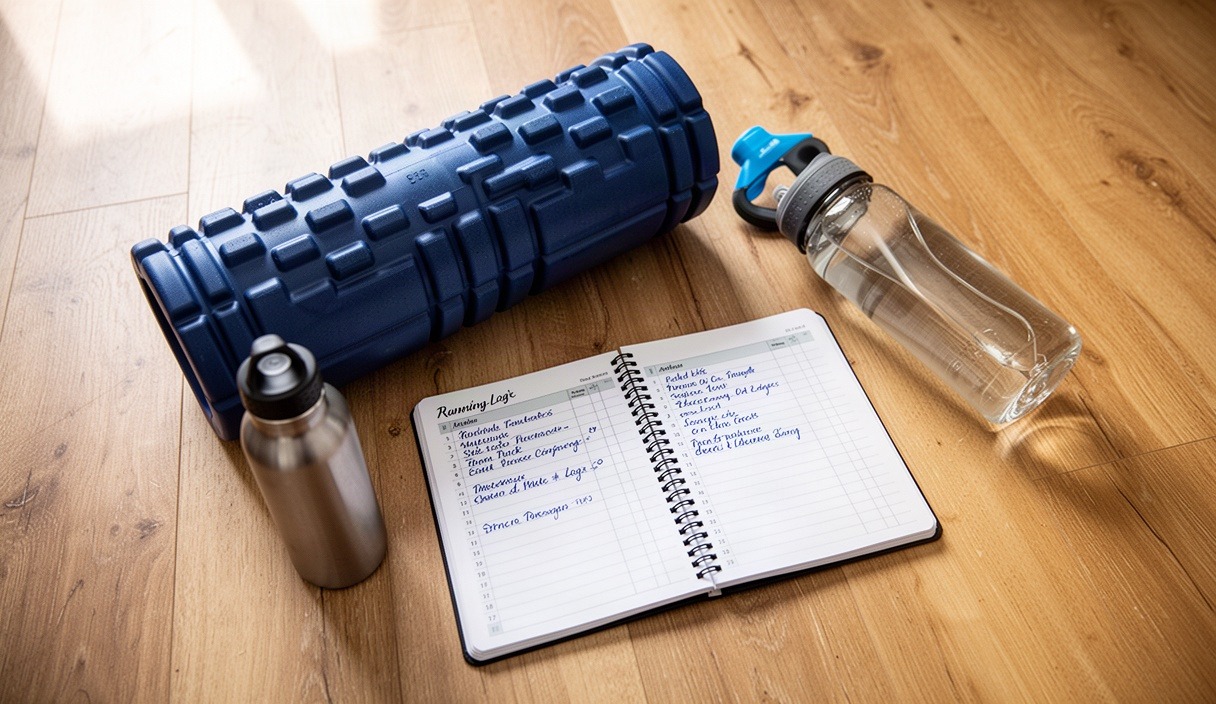
Introduce the soleus raises, tibialis wall raises, and eccentric drops into your weekly schedule every other day. Track your morning symptoms in a notebook: rate your first-step pain upon getting out of bed on a scale from zero to ten. If your morning pain stays at a two or below, your current loading level is tolerable. If morning pain jumps to a four or above, reduce your volume and intensity.
When you reintroduce running, follow a run-walk protocol on flat dirt or crushed gravel. Start with intervals of one minute of easy running followed by one minute of brisk walking for 20 minutes total. Keep your cadence alert and light, aiming for roughly 170 to 175 steps per minute. Build total volume by no more than 10 percent per week, and remember that real tendon and bone adaptation occurs over months of consistent, patient loading.
This journal provides training notes for educational purposes: consult a sports doctor or physical therapist before starting an intense daily running regimen. Disclaimer