
Luna breaks down what five years of daily running did to her joints, mental focus, and fatigue levels. Learn which streak habits protect your body and which ones break it.

On a cold Tuesday in November, I made a decision to tie my laces and run at least one mile every day for thirty days. That initial target passed quietly, and the habit kept rolling until thirty days turned into 1,826 consecutive days: exactly five years without taking a single scheduled rest day. Over those years, the streak covered more than 9,400 miles through heat waves, blizzards, travel across multiple time zones, and periods of high professional stress. Running shifted from an athletic hobby to the central anchor of my daily calendar.
A five-year run streak teaches lessons that traditional marathon training cycles obscure. Running every single day strips away the debate over whether to train, but it introduces distinct physical, physiological, and emotional complications. Total commitment to daily mileage yields clear cardiovascular and psychological payoffs, yet it carries an insidious toll on connective tissues and systemic energy reserves. This account breaks down the real data, daily modifications, and physiological realities of logging miles every day for half a decade.
Why I Chose a Daily Running Routine
My decision to start a daily running routine grew out of frustration with inconsistent training patterns. Like many recreational runners, I lived in a cycle of building up volume for three months, suffering a minor tweak or losing momentum during a busy work week, taking two weeks off, and starting over from scratch. The cognitive friction of deciding whether to run each morning consumed unnecessary energy. By removing the choice entirely and establishing a non-negotiable baseline of at least 1.5 miles per day, running became as automatic as brushing my teeth.
The second driver was accountability to baseline physical output. When training schedules permit two or three rest days per week, it is easy to let two days slide into four. When daily movement is mandatory, you learn to confront excuses head-on. Weather conditions, minor fatigue, and tight work deadlines stopped being reasons to cancel a workout. Instead, they became logistical puzzles to solve with earlier alarms, headlamps, or treadmill access.
Finally, I wanted to understand how my body would handle sustained mechanical stress without conventional rest intervals. Traditional coaching dogma dictates that muscle repair and cardiovascular adaptations occur solely during rest. I wanted to see if gentle active recovery runs could replace sedentary days while keeping overuse injuries at bay. The experiment provided answers, though several arrived through uncomfortable trial and error.
Cardiovascular and Mental Benefits Observed Over Five Years
The aerobic adaptations gained over five uninterrupted years were substantial. Resting heart rate dropped from 61 beats per minute to a consistent 46 beats per minute during sleep, as tracked by wearable sensors. Aerobic efficiency improved to the point where an easy conversational pace shifted from nine minutes per mile down to seven minutes and forty-two seconds per mile at an identical sub-aerobic heart rate of 132 beats per minute. This occurred without an emphasis on brutal speedwork; steady, persistent aerobic stimulus built an expansive capillary network and mitochondrial density.
Mental regulation emerged as an even larger benefit than cardiovascular progress. Running daily established a dependable boundary between the pressures of the workday and personal time. The predictable rhythm of rhythmic foot strikes lowered evening daily balance levels and smoothed out spikes in daily anxiety. When faced with acute personal or professional turbulence, knowing that I could reliably cover miles without negotiation provided a grounding baseline of self-efficacy.
| Health Metric | Baseline (Year 0) | Mid-Point (Year 2.5) | Five-Year Mark |
|---|---|---|---|
| Resting Heart Rate (bpm) | 61 | 50 | 46 |
| Aerobic Base Pace (min/mi) | 9:05 | 8:18 | 7:42 |
| Average Sleep Duration (hrs) | 6.8 | 7.4 | 7.6 |
| Annual Head Colds/Mild Illness | 4 occurrences | 1 occurrence | 2 occurrences |
Furthermore, daily running sharpened sleep hygiene. When you run every day, your body forces you to respect bedtime. Irregular bedtimes and poor nutrition produce immediate, painful feedback the following morning on the road. The habit practically eliminated chronic restful sleep support, as physical fatigue naturally synchronized circadian rhythms, driving an average increase in deep sleep duration of 22 minutes per night across the five-year span.
The Hidden Cost: Joint Wear and Cumulative Fatigue
Despite the systemic adaptations, daily running introduces chronic friction that rest days typically mitigate. The human musculoskeletal system relies on cyclical phases of breakdown and protein synthesis. While cardiovascular capacity rebounds within 24 to 36 hours, connective tissues such as the plantar fascia, Achilles tendons, and patellar ligaments adapt at a much slower rate due to limited vascularization. By year three, small grumbling aches began to simmer beneath the surface.
Cumulative fatigue is deceptive. It does not feel like the acute muscular soreness that follows an intense track workout or a personal-record half marathon. Instead, it manifests as heavy legs during the first mile, sluggish cognitive processing in the mid-afternoon, and an elevated morning resting heart rate that refuses to drop for weeks at a time. The central nervous system takes on a continuous, low-grade burden that subtle adjustments in diet or hydration cannot entirely erase.
Joint wear also requires candid assessment. Magnetic resonance imaging or medical diagnostics were not needed to understand that repetitive ground reaction forces, roughly two and a half times body weight per stride, create localized inflammation when cadence drops and mechanics break down under fatigue. The left Achilles tendon and right hip capsule frequently displayed mild, localized stiffness during the initial five hundred meters of every run. Anyone considering a multi-year running habit must realize that continuous movement without scheduled rest requires constant physical maintenance to prevent minor micro-tears from transforming into full structural ruptures.
Adapting Volume: Very Short Runs on Exhausted Days
Surviving a multi-year streak without catastrophic injury requires mastering the art of the minimum effective dose. I quickly abandoned the ego-driven idea that every run had to be a challenging five-miler. On days when work ran past midnight, when systemic illness threatened, or when joint stiffness signaled excessive inflammation, the daily run was reduced to what streak runners call a maintenance run: exactly 1.5 to 2 miles at a very slow pace.
These maintenance runs were conducted at paces up to two minutes slower per mile than standard easy runs. The objective of an exhausted-day run is not to build fitness. The objective is to fulfill the habit, stimulate blood flow to accelerate metabolic waste clearance, lubricate stiff synovial joints, and get off your feet as quickly as possible. The structure of these recovery-oriented sessions followed a precise, defensive checklist:
- Pre-run mobility check: Spend three minutes doing bodyweight calf drops and controlled ankle rotations before stepping out the door.
- Soft surface selection: Run exclusively on packed dirt trails, crushed cinder paths, or a modern treadmill deck rather than asphalt or concrete.
- Cadence preservation: Keep stride length short and step rate high, around 175 to 180 steps per minute, to minimize vertical oscillation and reduce peak impact force on the knees.
- Absolute nose-breathing limit: If breathing through the nose alone becomes unsustainable, reduce the pace immediately to remove any anaerobic metabolic stress.
- Post-run immediate recovery: Consume 25 grams of quickly digestible protein and elevate the lower legs against a wall for six minutes to reduce venous pooling.
Learning to run without pride on depleted days proved to be the single most critical survival mechanism. A 16-minute, two-mile shuffle might feel embarrassing when viewing social fitness feeds, but it allowed the musculoskeletal system just enough respite to avoid structural failure while keeping the streak intact.
When to Break the Streak Without Guilt
A running streak can easily morph from a positive personal discipline into an unhealthy, obsessive trap. Preserving a continuous calendar streak should never supersede long-term functional mobility. There are clear, unambiguous physical red lines where running must stop immediately, and a physician, orthopedist, or physical therapist must be consulted.
The primary indicator to stop running is sharp, localized, or asymmetrical pain that causes an alteration in your natural gait. If you cannot plant your foot, toe off, and swing your leg with clean biomechanics, you are no longer training: you are damaging compensatory structures. Running through the pain of a potential bone stress injury, such as a tibial stress reaction or metatarsal fracture, can result in a full fracture that sidelines you for six months instead of three weeks.
Systemic medical events also demand an immediate end to the routine. Running through upper-respiratory symptoms above the neck, such as a mild runny nose or light head congestion, is generally manageable at very low intensity. However, any systemic infection accompanied by fever, body aches, chest tightness, or gastrointestinal distress demands complete bed rest. Forcing a run with an active fever elevates the risk of viral myocarditis, a serious and potentially fatal inflammation of the heart muscle. In these scenarios, breaking the streak is an act of discipline, not failure.
Common Mistakes
Five years of continuous running revealed several recurring pitfalls that trap runners who attempt high-frequency training:
- Treating every run as a test: Running at a medium-hard tempo every day is a direct path to overtraining syndrome. Roughly 82% of all weekly mileage must remain genuinely easy.
- Wearing identical footwear continuously: Running in the same pair of shoes day after day compresses the midsole foam permanently and loads identical joints and tendons in the exact same vector. Rotating through three distinct shoe models with varying heel drops (such as 4mm, 8mm, and 10mm) alters loading angles and reduces repetitive stress patterns.
- Under-fueling carbohydrate intake: Daily running burns glycogen steadily. Runners often undereat carbohydrates, leading to a chronic hormonal deficit, depressed natural vitality or estrogen levels, and disrupted bone mineral density.
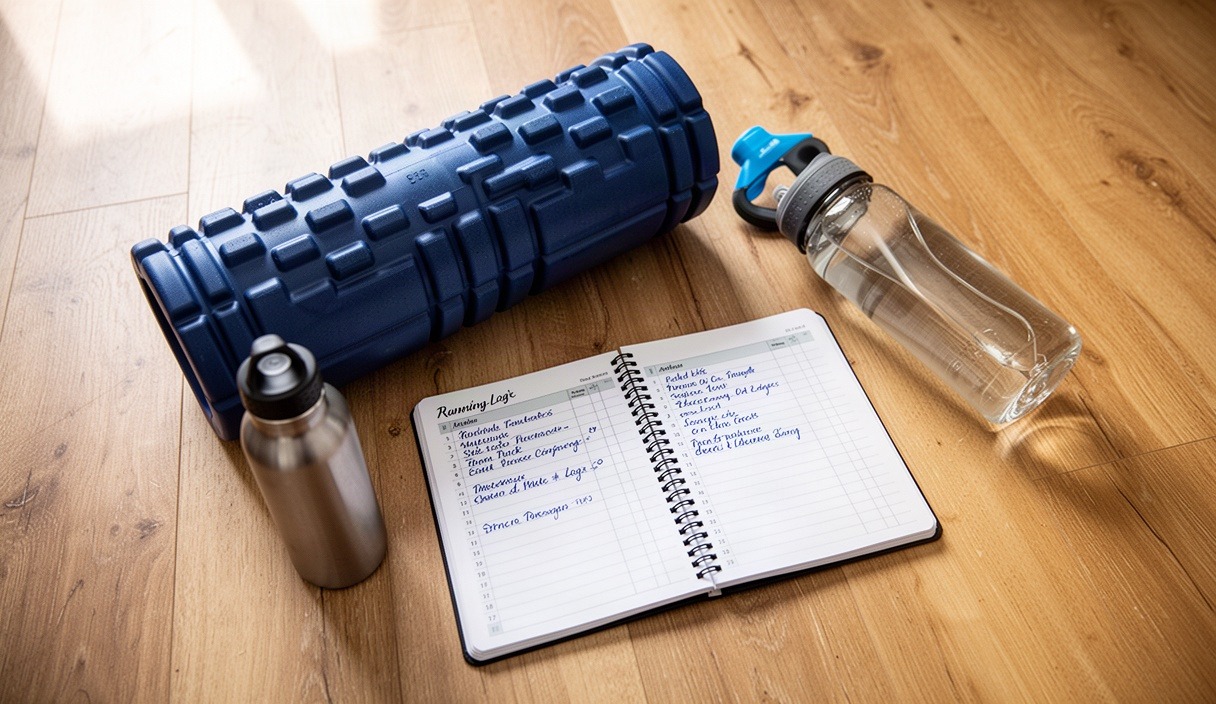
- Ignoring tissue quality work: Running every day causes calf muscles and hip flexors to tighten progressively. Failing to perform daily foam rolling, hamstring stretching, and eccentric calf raises will eventually result in Achilles tendinopathy or plantar fasciitis.
Practical Next Steps
If you want to experiment with daily running, avoid jumping immediately into an open-ended multi-year streak. Instead, build your baseline methodically using the following progression:
- Establish a medical baseline: Consult with a physician or physical therapist to evaluate preexisting joint issues, bone density markers, and current cardiovascular health before attempting high-frequency running.
- Commit to a fixed 14-day testing block: Set a daily minimum of 1.2 to 1.5 miles. Keep the pace conversational, tracking your morning resting heart rate each day upon waking.
- Audit your shoe rotation: Procure at least two pairs of reliable running shoes with different stack heights and foam densities to alternate on consecutive days.
- Incorporate strength work twice per week: Build resilient connective tissues by performing single-leg Romanian deadlifts, standing calf raises, and side planks for fifteen minutes twice weekly. Running alone does not build sufficient stability.
- Establish an exit criterion: Decide ahead of time which symptoms, such as limping or an active fever, will cause you to voluntarily pause your streak without regret. Longevity in sport always matters more than numbers on a calendar.
This journal provides training notes for educational purposes: consult a sports doctor or physical therapist before starting an intense daily running regimen. Disclaimer